https://www.facebook.com/tr?id=571969559025891&ev=PageView&…">

Newsroom

EANJ Announces Free Summer Webinar Series for Employers in Collaboration with NJ Division on Civil Rights

EANJ Announces Free Summer Webinar Series for Employers in Collaboration with NJ Division on Civil Rights 150 150 employersassoc

Employers Association of New Jersey, in partnership with the NJ Division on Civil Rights, is excited to announce a comprehensive three-part webinar series aimed at educating employers for compliance with the NJ Law Against Discrimination (NJLAD). Each session will provide participants with practical knowledge and best practices to ensure compliance and enhance their management of workplace rights under the NJLAD.

The series kicks off with a dynamic session, The New Jersey Law Against Discrimination in the Workplace, focusing on creating a workplace that is free from discrimination and harassment. Employers will learn about key protections under the NJLAD, effective strategies to prevent harassment, and potential employer liability.

Continuing with the series, the second webinar, Reasonable Accommodations in the Workplace, will discuss the practical aspects of reasonable accommodations under NJLAD, including the interactive process, undue hardship, non-apparent disabilities, and the Pregnant Workers Fairness Act. This session will guide employers through the legal framework and practical steps for accommodating employees effectively, ensuring compliance and fostering an environment of equality.

The final session, Recognizing and Responding to Microaggressions, focuses on the nuanced effects of microaggressions in the workplace. Participants will learn about how microaggressions can contribute to hostile environment harassment and disparate treatment.

“These webinars are a vital part of our mission to provide New Jersey employers with the resources they need to foster a respectful and compliant workplace environment,” said Amy Vazquez, Vice President at EANJ.  “We are excited to partner with the Division on Civil Rights on this project.”

The webinars are scheduled for June 26, July 24 and August 15, 2024 and are open to all employers in New Jersey at no cost.  Employers can opt to attend the full series or the individual sessions that appeal to them. Registration is now open and spots are limited to encourage interactive sessions and detailed discussions.

For more information and to register, please visit: https://www.www.eanj.org/programs-training/seminars/summer-webinar-series-nj-division-civil-rights 

About EANJ: Employers Association of New Jersey is a non-profit trade association dedicated to helping employers make sound and responsible employment decisions through education, informed discussion, training, and access to benefits’ plans. With a 108-year history, EANJ continues to drive innovation and growth while fostering collaboration among its members. For more information, visit www.www.eanj.org.


EANJ Gathers Key Stakeholders for its 108th Annual Membership Meeting

EANJ Gathers Key Stakeholders for its 108th Annual Membership Meeting 150 150 employersassoc

The Employers Association of New Jersey (EANJ) is proud to announce its 108th Annual Membership Meeting, a flagship event bringing together industry professionals to delve into critical issues shaping the landscape for New Jersey employers.

Scheduled for Tuesday June 4, 2024, the meeting serves as a platform for members to engage in meaningful discussions, gain insights from distinguished speakers, and network with peers within the state’s business community.

This year’s meeting will mark a significant milestone as EANJ welcomes its 4th President in its 108-year history. Christine Myers, the newly appointed President, will present her vision, goals, and strategies for steering EANJ towards a prosperous future.

The event will feature a discussion with influential policymakers including Senators Jon M. Bramnick and Joseph Cryan, who will provide insights into legislative policies affecting employers and businesses in New Jersey.  Audrey Lane, of Garden State Initiative, will moderate the discussion. 

“Our annual membership meeting is a cornerstone event where EANJ members can gain valuable insights, connect with industry leaders, and contribute to the collective advancement of New Jersey’s business landscape,” said Myers. “We encourage all members and stakeholders to join us and be a part of this transformative dialogue.”

Registration for the event is now open, offering attendees the opportunity to engage in networking, participate in informative discussions, meet and hear from legislators, and explore sponsorship opportunities to showcase their support for EANJ and the wider employer community in New Jersey.

Event Details:

Date: Tuesday, June 4, 2024

Time: 9:30am – 12pm  

Location: Park Avenue Club, 184 Park Avenue, Florham Park, NJ 07932  

Click here to register and select sponsorship opportunities

About EANJ: Employers Association of New Jersey is a non-profit trade association dedicated to helping employers make sound and responsible employment decisions through education, informed discussion, training, and access to benefits’ plans. With a 108-year history, EANJ continues to drive innovation and growth while fostering collaboration among its members. For more information, visit www.www.eanj.org.


Employers Association of New Jersey Welcomes Christine Myers as New President

Employers Association of New Jersey Welcomes Christine Myers as New President 150 150 employersassoc
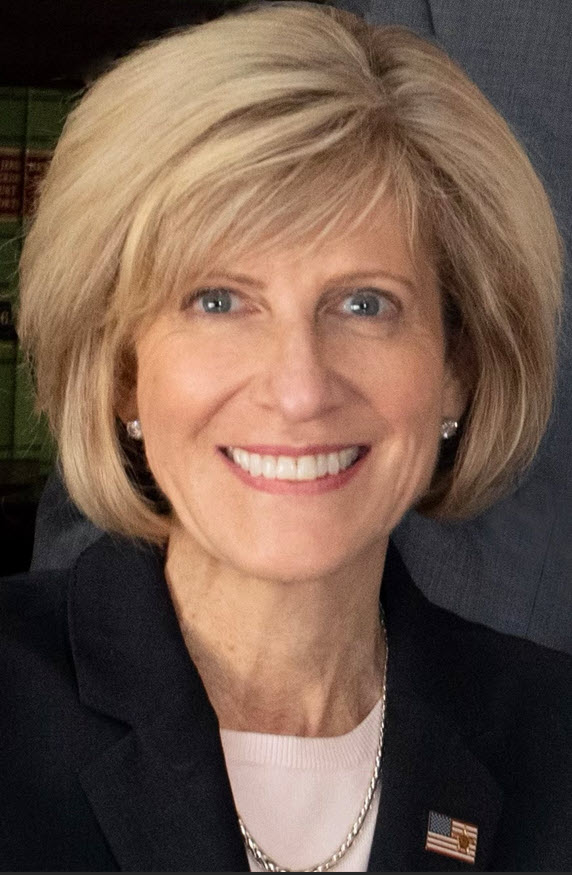
Christine Myers
Christine Myers

Employers Association of New Jersey (EANJ) proudly announces the appointment of Christine Myers as its new President, effective March 11, 2024. With a distinguished background in public service, corporate leadership, and community engagement, Myers brings a wealth of experience and a dynamic vision to her role as the fourth president in EANJ’s 108-year history and its first woman president.

Myers’ remarkable career spans various sectors, showcasing her commitment to excellence and innovation. An experienced corporate executive, successful small business owner, presidential appointee, non-profit board member and elected official, Myers’ extensive experience and proven track record make her an invaluable asset to EANJ and its members.

“The Board of Directors is delighted to welcome Christine Myers as the leader of EANJ,” said Richard Balka, Chair of the EANJ Board.  “With a deep understanding of the needs of New Jersey employers, she resonates with our core mission to help all New Jersey employers to strengthen the relationship between employer and employees while navigating the ever changing legal and compliance landscape.”

Currently serving as Commissioner Director for 2024 on the Morris County Board of County Commissioners, Myers has spearheaded the implementation of a County Strategic Plan and debt reserve policy, ensuring the long-term prosperity of Morris County. The Board of County Commissioners, with broad powers granted by the state legislature, regulates county property, finances, and affairs.

In 2017, Myers was appointed Regional Advocate at the Office of Advocacy, U.S. Small Business Administration, where she addressed regulatory challenges faced by thousands of business owners, earning widespread recognition for her dedication to the success of small businesses.

Myers’ corporate career began at AT&T, managing critical technology and communication programs for entities such as the U.S. Dept. of State, the White House and U.S. presidential candidates. She later held executive positions at Lucent Technologies, Avaya and Siemens Enterprise Networks, designing and leading global alliance organizations and delivering innovative solutions for public and private sector clients.

As the co-founder of Madison Park Foods, an award-winning seasoning and spice rub manufacturer, Myers has demonstrated entrepreneurial acumen and a commitment to quality.

“We are thrilled that Christine Myers has agreed to lead us into our next chapter,” said Doreen Anthony, head of the search committee and EANJ board member.  “We were fortunate to have found her thanks to the efforts of DCM Associates.  DCM presented us with several excellent candidates and guided us through each step of the process.  We could not be happier with the outcome”.

In her new role as President of Employers Association of New Jersey, Myers is committed to advancing the mission of EANJ, driving innovation and growth, and fostering collaboration among members.

“New Jersey’s prosperity hinges on our employers’ success. EANJ provides crucial resources, training, and guidance necessary for employers to thrive in today’s business climate,” said Myers.  “EANJ’s commitment to providing individual guidance to their members is truly amazing. I am excited and honored to lead EANJ and collaborate with the talented staff and dedicated board to expand and extend services to even more employers in New Jersey.”

Employers Association of New Jersey is a non-profit trade association dedicated to helping employers make sound and responsible employment decisions through education, informed discussion, training, and access to benefits’ plans. With a 108-year history, EANJ continues to drive innovation and growth while fostering collaboration among its members. For more information, visit www.www.eanj.org.


Incorporating AI in the workplace is a balancing act for employers

Incorporating AI in the workplace is a balancing act for employers 150 150 employersassoc

As the influence of artificial intelligence (AI) continues to permeate the workplace, its accessibility and widespread use are becoming defining elements of the modern professional landscape.


When carefully harnessed, AI has the potential to revolutionize the way businesses operate, offering efficiency, innovation, and transformative solutions.

However, as organizations increasingly integrate AI into their practices, the ethical considerations surrounding its use have come to the forefront, prompting responses from regulatory and legislative bodies, including the U.S. Equal Employment Opportunity Commission (EEOC) and the NJ Legislature.

The EEOC is focusing on employers’ increasing use of technology as part of the organization’s Strategic Enforcement Plan for 2024.

This focus includes the use of technology, including AI and machine learning, to target job advertisements, recruit applicants, or make or assist in hiring decisions where such systems intentionally exclude or adversely impact protected groups.

Perhaps the most visible example of AI employment bias to date has been at Amazon.  The company’s AI-driven hiring model, while groundbreaking, encountered a major stumbling block – a propensity to favor male candidates for technical roles.  The algorithm, when learning from its human-generated dataset, inadvertently absorbed ingrained biases and perpetuated them.

“Integrating generative AI into decision making seems like a good defense to bias, particularly in hiring; however, unconscious bias can seep in,” said Amy Vazquez, Interim President of Employers Association of New Jersey.  “Organizations must remain vigilant about the ethical and compliance implications of using this technology in HR practices.”

According to the EEOC, whether an employer or computer made a bias employment decision, the employer is ultimately liable. That’s why employers should consider working with their vendors from the start to ensure they are using the products correctly and reducing the potential for bias decision-making.

The EEOC recommends that employers test all employment-related AI tools early and often to make sure they aren’t causing legal harm.

In New Jersey, proposed legislation (A4909) mandates a “bias audit” for hiring software, allowing only tools that have undergone scrutiny for discriminatory patterns.  It would require annual reviews of whether programs comply with state law.

“As employers explore best practices for integrating AI into existing workflows, their focus should be on leveraging AI’s capabilities, with a keen eye towards fairness and compliance,” says Vazquez.

Employers Association of New Jersey (EANJ) is hosting a one-hour webinar, aimed at providing HR professionals with the knowledge and strategies needed to integrate AI technology, foster innovation and stay ahead in the ever-evolving landscape of HR technology. Details & Registration.

Study Challenges Negligent Hiring Concerns, Advocates for Second-Chance Hiring

Study Challenges Negligent Hiring Concerns, Advocates for Second-Chance Hiring 150 150 employersassoc

In a recent study by the Legal Action Center and National Workrights Institute, advocates for second-chance hiring argue that the fear of negligent hiring, often cited as a deterrent for hiring individuals with criminal histories, is largely overblown.

Negligent hiring is a civil (non-criminal) cause of action in which an employer is found liable because they hired someone they knew, or should have known, was likely to harm others in the position for which they were hired.

The comprehensive report analyzed negligent hiring decisions over a 48-year period, from 1974 to 2022, revealing that negligent hiring liability is far less common than perceived, with approximately 47 cases per year in which employers incurred liability for negligent hiring.  

The study highlights that 97 percent of cases where employers were found guilty of negligent hiring involved roles with specific risks, such as contact with vulnerable populations, operation of a motor vehicle, access to financial assets or homes, use of force, use of firearms, or access to alcohol.

“Employers can safeguard against negligent hiring claims by exercising due diligence and reasonable care in the hiring process,” says Andree Laney, Legal Advisor with Employers Association of New Jersey, “including conducting thorough background checks.”

In addition to background checks, the study recommends employers document job responsibilities to identify inherently risky positions and conduct individualized assessments for candidates with criminal histories.

According to the study, in the few jobs where negligent hiring is a risk, employers can generally give applicants with records a fair chance by conducting and individualized assessment that considers whether the prior offense is related to the job in question, how much time has passed since the offense and evidence of rehabilitation.

“Informed employers can hire qualified candidates with criminal records without risking negligent hiring liability,” emphasized Lewis Maltby, president of National Workrights Institute.

An EANJ membership survey, conducted in November 2023, revealed 80 percent of the 94 employer-respondents screen candidates for conviction records and 60 percent have knowingly hired and/or retained someone with a conviction record.  

When asked the greatest concern or fear about hiring an individual with a conviction record, 51 percent indicated their fear was the individual may endanger employees or clients; 32 percent were concerned of the likelihood the individual would commit the same crime again; and 23 percent of respondents indicated they had no particular concerns about hiring individuals with a conviction record.

“As we navigate these findings, it becomes evident that the perspectives of employers are evolving, and the fear associated with hiring individuals with criminal records may be rooted more in perception than in the actual risk of negligent hiring,” said Amy Vazquez, Vice President of Employers Association of New Jersey.

Join Andree Laney and Lewis Maltby for a comprehensive discussion on best practices to help employers make informed decisions and navigate the complexities of hiring individuals with prior convictions – details and registration.


John Sarno Leaving Employers Association of NJ

John Sarno Leaving Employers Association of NJ 150 150 employersassoc

John Sarno, President of the Employers Association of New Jersey (EANJ) will be leaving his position at the end of 2023 for other professional and academic pursuits.  Hired in 1995, he is only the third chief executive in the organization’s 107-year history.

EANJ’s board announced a search for a new chief executive in November.

Known for his high energy and creativity in supporting employers and developing multi-stakeholder initiatives, Sarno leaves a legacy of innovative leadership in both the private and public sectors, and an extensive body of work in employment law, labor standards, management training and public policy.

Most of his work at the Association has been at the center of law and the workplace, advising employers on best management practices and training good employers to be better.  During his tenure, he trained thousands of managers and supervisors from the executive suite to the shop floor, at innumerable worksites, from manufactures to nonprofit agencies, at universities and municipalities, at financial and healthcare institutions.

During much of that time, he also taught management, law, ethics and public policy at several universities. According to a student on his LinkedIn profile, “John Sarno is everyone’s favorite professor! His ability to teach and engage students is unmatched. He’s passionate and extremely knowledgeable about public policy & history and is able to tie back to economic impacts. Both fun and challenging.”

During the COVID pandemic, he served on the Governor’s Task Force on Small Business and as a member of HealthyNJ, helping to develop the state population health strategic plan. During the pandemic, he delivered bi-monthly webinars attended by over one thousand employers and the Association published a comprehensive report on employer policies and procedures.

In addition to his executive and strategic leadership, Sarno led an expert staff of lawyers and subject matter experts to advise employers on labor and employment issues, provide workplace training, in addition to offering access to benefits’ plans.

According to an employer-member on his LinkedIn Profile, “John was an excellent business partner. He helped us design and implement the Executive level training on legal issues which collectively guided the Company to achieve great results.”

Sarno participated in all three branches government, working on legislation, proposed regulations and cases before the appellate and supreme courts of the state.

In Aguas v. State of New Jersey, an employer’s affirmative defense in an employee’s harassment suit was established. Carrone v. UnitedHealth upheld employment arbitration, and Maw v. Advanced Clinical Communications upheld non-competition agreements.

Sarno published frequently with an enormous output of articles, case summaries, compliance guidance, monographs, blogs and commentaries. He developed and taught HR law courses and is widely recognized in the state as an employment law expert.

Always headquartered in Essex County, Sarno positioned the Association to shape public policy and brand himself as a thought leader.

“It was frustrating at first, with Trenton being so insular,” he says.

Sarno has recounted how he walked State Street introducing himself to other association leaders only to be lost in the scrum of lobbying.  He was turned off to the short-term thinking that drove their agendas.


And he learned quickly that small business priorities did not mesh with the needs of larger employers.

“While every employer is a business, not every business is an employer,” he says.

88.6% of businesses in New Jersey employ 9 or fewer workers, only 2.9% of businesses employ 50 or more workers.

“Small businesses tend to ignore labor regulations, if possible. Larger employers typically want to comply with regulations, or at least be in a good position when things don’t go well,” he says.

But when the country elected Barack Obama and later Phil Murphy governor of the state, Sarno and the Association were well positioned to provide thoughtful and forward-thinking leadership on labor standards, worker protections and employer-sponsored healthcare reform.

He became an expert on the Affordable Care Act and his substantial contributions to the Murphy health, labor and economic transition teams expanded the Association’s overall participation in the wider government, business and legal communities.  His expert service during the pandemic is widely viewed as a seminal moment in his career.


Sarno also applied his university research and teaching in behavioral science to focus on workplace culture and leadership to maximize organizational performance and create healthy teams.  With degrees in psychology, counseling and the law, his multi-disciplinary training became popular with human resource professionals at a variety of employers.

In 2022, Sarno developed and co-taught Leadership in the New Age, a filled-to-capacity class that focused on collective knowledge building and collaboration within increasingly diverse workplaces. He later published Transforming Workplace Culture: Ethics, Diversity and Innovation in the International Journal of Management and Business and became a popular presenter at management conferences and media commentator.

A major membership expansion among cities and municipalities also resulted in innovative training to reduce risks by improving culture and fostering accountability.

His tenure at the Association was not an endless line of achievements, however.  When he led the sponsorship of a multiple employer healthcare plan in 2009 in the midst of major healthcare reform, membership soared three-fold within the decade.  When the plan filed for bankruptcy during the pandemic, two-thirds of the membership was lost.

“It was crisis leadership, for sure. High levels of stress, for sure,” Sarno says.  He says that the experience deepened his understanding of the physical and mental aspects of work-life balance.

During that time, he published Better Work for More People: Meaningful Jobs and the Renewal of Virtue, arguing that purposeful work was essential to mental health, healthy communities and a functioning democracy.  It built on scholarship done early in his career as a vocational rehabilitation counselor and called for a healthier and more meaningful relationship between management and labor, the business community and the community at large.

Sarno’s post-pandemic leadership has been powerful and astute, as mental health, burnout and morale have become top employer concerns.

While steering the Association back onto a sustainable path, he considers supporting the Association’s staff through the pandemic and beyond as one of his most meaningful accomplishments.

“The Association staff is remarkable. They have been the reason why we have remained sustainable. It’s their high-level expertise and impressive knowledge, their commitment to the mission . . .  that’s the reason why members have stayed,” he says.


Unlike the health plan, a multiemployer retirement savings plan that the Association formed in 2014 may prove a long-lasting achievement.

A recent membership meeting exhibited the trust and loyalty necessary for a membership-driven organization to thrive. “We trust and rely on the support that EANJ gives us,” said a meeting participant. “EANJ is our lifeline,” said another.

“What have we learned from the devastation and heartache caused by the pandemic?” he asked at a recent business meeting.

For some employers, the pandemic has marked a shift in thinking about workers’ physical safety and mental wellbeing, he observed.

Most recently, Sarno has been recognized by the Community Health Law Project for his lifelong commitment to advancing equal rights and opportunities for people with disabilities and by the New Jersey Business and Industry Association for his public policy leadership.

He also received a Joint Legislative Resolution honoring the importance of his work and contributions to the betterment of the common good.

According to Sarno, “It’s certainly great to be recognized, the result of doing great work with great people throughout my entire career, including to this very day.”

The Association’s board has been invaluable to the organization’s success, he says. “The bond between the board and me has been one of mind, heart and spirit. Only through the group can the mission be fulfilled, ego and personal ambition second to the greater good. It has been one of the great privileges of my career to serve them,” he says.

Sarno will continue to serve as a board member of the Mental Health Association in New Jersey and on the State Commission of Employment and Training, where he is forming a Committee on Mental Health at Work helping to incorporate mental health awareness and solutions as part of the state’s workforce readiness strategy.

He has also been appointed as Distinguished Executive-in-Residence at Rutgers Business School in Newark, where he will be working with his friend and colleague Jeana Wirtenberg, Executive Director at the Rutgers Institute for Corporate Social Innovation where he will be teaching and mentoring students and business leaders on achieving both corporate and societal goals.

At the same time, Sarno has also joined his longtime colleague Keith Miller at his law firm, also in Newark, where he will provide advice and council on employment and labor relations cases and be available for workplace consultations.

“I am overjoyed as I begin the next chapter,” he says. “I live to work with both sides of the brain.”

State Labor Department Provides $10 Million for Incumbent Worker Training

State Labor Department Provides $10 Million for Incumbent Worker Training 150 150 employersassoc

The U.S. Chamber of Commerce has reported that only a dozen states, including New Jersey, have a higher percentage of their labor force working than before the pandemic.


According to the Chamber, there are 100 available workers for every 100 open jobs in the state.  This means that employers in New Jersey may need to train existing employees for new skills or new roles.


To help employers, the New Jersey Department of Labor and Workforce Development has published a Notice of Grant Opportunity (NGO) for its UPSKILL: NJ Incumbent Worker Training Grant Program.  Grants are available for FY2024 for a total of $10 million.


The purpose of the UPSKILL:NJ Incumbent Worker Training Grant program is to provide New Jersey-based employers with up to 50 percent cost reimbursement assistance to train incumbent frontline employees to meet current and future occupational skill requirements. Grant funds are not intended for company-required annual training or new-employee orientation training.


The grant program is open to the following New Jersey applicants:

  • Single employers seeking to train their employees in skills needed for jobs focused primarily on Advanced Manufacturing, Clean Energy, Film & Digital Media, Finance & Professional Services, Food & Beverage, Life Sciences, Offshore Wind, Technology, Transportation & Logistics, and
  • An employer organization, labor organization, community-based organization or faith-based organization; secondary or post-secondary school or training provider seeking to meet the collective training needs of an industry-specific consortium of employers for jobs focusing primarily on Advanced Manufacturing, Clean Energy, Film & Digital Media, Finance & Professional Services, Food & Beverage, Life Sciences, Offshore Wind, Technology, Transportation & Logistics.

According to John Sarno, president of the Employers Association of New Jersey,  job openings in the state have increased 10 to 39 percent between February 2020 and July 2023. During the same period, the labor participation rate was above the national average.


“Employers have to begin thinking about making some investments in skills training of incumbent workers and the state is willing to match that investment,” he says.


For FY2024, employer registration deadlines are 12/13/23 and 03/06/24 – View Entire NGO


Some Employers Consider Granting Leave for Pregnancy Loss

Some Employers Consider Granting Leave for Pregnancy Loss 150 150 employersassoc

Earlier this year, a bill was introduced in the NJ Legislature which would require employers to provide bereavement leave to an employee when they experience the death of a child or a miscarriage, among other reasons.  However, there has been no movement on the bill since February.

When an employer-member of Employers Association of New Jersey (EANJ) reached out in late September seeking information regarding the policies of other organizations concerning time-off benefits for individuals experiencing pregnancy loss and related challenges, EANJ responded by conducting a membership survey.

The survey results revealed that all 60 participating employers offered bereavement days or other forms of paid time off that can be used for bereavement purposes.  Only 14% of respondents had formalized policies explicitly addressing pregnancy-related losses, offering between three and five days for these purposes.

A few respondents indicated that, while their policies didn’t explicitly address pregnancy loss, it would nevertheless be covered under the category of loss of a child or immediate family member.  

Pregnancy loss, which includes miscarriages and stillbirths, is a deeply personal and often distressing experience for those affected. Its impact transcends backgrounds, ages, and genders, making it a universal concern. The emotional and physical recovery from pregnancy loss can be challenging, and many individuals require time and support to heal.

Historically, workplace policies surrounding pregnancy loss have been either nonexistent or insufficient, leaving individuals to navigate their grief while maintaining their regular work commitments.

“As our understanding of mental health and well-being has expanded, so too has our recognition of the need for compassionate policies that address the unique challenges of pregnancy loss,” said Amy Vazquez, vice president of EANJ.  

In certain circumstances, temporary disability benefits may be available when an employee is unable to work for 8 days or longer.  

The newly enacted federal Pregnant Workers Fairness Act (PWFA) imposes an obligation on covered employers (those with 15 or more employees) to provide “reasonable accommodations” to a worker’s known limitation related to pregnancy, childbirth, or related medical conditions, unless such accommodation would create an “undue hardship” for the employer.

The Equal Employment Opportunity Commission (EEOC), the agency charged with enforcing the PWFA, has proposed regulations, which include providing accommodations for pregnancy and “related medical conditions.”  Included in the proposed definition of “related medical conditions” is miscarriage, fertility care, past and future pregnancies, and stillbirths.  Accommodations under the PWFA could include time off medical appointments and recovery.

“It is encouraging to see employers going beyond mere compliance and contemplating the inclusion of this type of employee benefit, which supports grieving employees in the same way as traditional policies support joyful new parents,” said Vazquez.

NLRB’s New Work Rules Standard Favors Employees

NLRB’s New Work Rules Standard Favors Employees 150 150 employersassoc

On Aug. 2, the National Labor Relations Board (NLRB) set a new standard to evaluate facially neutral work rules in union and nonunionized workplaces when it issued a much-anticipated decision in Stericycle, Inc., 372 NLRB No. 113 (2023).

The new standard significantly favors employees and unions and overrules the more employer-friendly precedent in place since 2017.
 
The Board held that a work rule that has the tendency to “chill” employees in the exercise of collective rights is presumed unlawful. In determining whether a work rule has the tendency to chill employees from their rights, the Board will interpret the rule from the perspective of a reasonable employee “who contemplates engaging in [concerted] activity” but who fears discipline or discharge.

According to John Sarno, president of the Employers Association of New Jersey, the Board’s decision provides little, if any, guidance to employers about how to craft rules that will satisfy the new standard.

Sarno points to the following standard policy contained in an Employee Handbook:

If you are subject to harassment you must report it to Human Resources.  Any investigation should be treated as confidential

“I doubt that this policy is lawful because under the National Labor Relations Act, an employee can report harassment to co-workers and third parties.  Employees also have the right to exchange information with pretty much anyone that they want too.  Thus, this policy would likely be interpreted as chilling worker rights,” he says.

Sarno also points out that workers have an absolute right to talk to others, including co-workers, about their wages, meaning that those confidentiality polices are also unlawful.
 
“There are dozens of standard polices which need review and likely revision,” he adds.

EANJ is convening a live 3-hour seminar on September 19th to cover the new legal standards and much more. Click here.

Temp Workers Bill of Rights: Caution for N.J. Employers

Temp Workers Bill of Rights: Caution for N.J. Employers 150 150 employersassoc

On July 21, 2023, the New Jersey Department of Labor and Workforce Development posted on its website proposed regulations to implement the New Jersey Temporary Workers Bill of Rights. Public comments on the proposed regulations will be accepted until October 20, 2023.

Among other things, the proposed regulations detail how a temporary worker’s hourly rate of pay is to be calculated, including when an employer pays a comparator on a salary basis, and how to determine when temporary workers and third-party client employees are performing similar work; clarify that workers’ years of service are not relevant to determine whether two jobs are substantially similar; and provide additional clarity regarding what is required for wage statements and payroll deductions, among other things.

The proposed regulation seeks to implement the statue, which was signed into law on February 6, 2023 and requires temporary workers to be paid the same average rate of pay as a permanent employee of the third-party client who performs the same or substantially similar work for the employer at the same time the temporary worker is assigned to the position. It also goes one step further to require that temporary workers also receive the “average cost of benefits, or the cash equivalent thereof.”

The law does not apply to all temporary worker positions, but rather those positions that the Legislature considered to be “at greatest risk of exploitation.” For now, the law covers:

Food Preparation and Serving Related Occupations
Building and Grounds Cleaning and Maintenance Occupations
Personal Care and Service Occupations
Construction Laborers
Helpers, Construction Trades
Installation, Maintenance, and Repair Occupations
Production Occupations
Transportation and Material Moving Occupations

The law also requires detailed wage notices to be provided to temporary workers in writing in English and in the language identified by the temporary worker as their primary language.

The also makes clear that, beginning May 7, it is unlawful for either a temporary help service firm or third-party client to retaliate against a temporary laborer for exercising their rights under the law.

Most of the statutory provisions will take effect August 5.  However, the provisions regarding hiring notices and prohibiting retaliation were effective May 7, 2023.

The law also allows an aggrieved temporary worker to institute a civil action in the Superior Court, with no exhaustion requirement, against both the temporary help service firm and the third-party client. The temporary help firm and third-party client could be held joint and severally liable for payment of wages or any other violation. The statute of limitations is six years from the final date of employment.

According to John Sarno, president of the Employers Association of New Jersey, the law also expressly provides that an action can be brought by one or more temporary laborers on behalf of themselves and other temporary laborers similarly situated. Employers will now likely face an increase in not only single plaintiff but also class action lawsuits.

“Employers that retain temp firms are on notice with this law,” Sarno says. “Joint and several liability means that the employer will be on the hook for violations committed by the temp firm.”

As such, Sarno recommends that employers have strong indemnification protection in their contracts with temporary help firms.   


Loading...